
Maintaining and Feeding Your Sourdough Starter
- Heather

- Mar 31
- 4 min read
Updated: Apr 1
At Loaves & Groves, the sourdough starter is the heartbeat of our kitchen. Every week, I receive so many questions about how to care for these "little guys," as my daughter likes to call them. I’ve been nurturing my own starter for years, and it has become an essential part of our family’s rhythm.
There is something so deeply comforting about warm, crusty bread straight from the oven or a sourdough cobbler shared after a long day. If you’ve been nervous that maintaining a starter is too difficult or requires a rigid schedule, I’m here to tell you the opposite: sourdough actually makes life easier.
I’ve never been much of a meal planner, but as long as I have a bubbly starter on the counter or in the fridge, I can whip up pancakes, pizza dough, or waffles on a whim. Sourdough is incredibly resilient—it’s much less about following "perfect" rules and much more about finding a flow that works for your home.
How to Feed Your Starter
While some methods can be fussy, I prefer a simple, intuitive approach that hasn't failed me yet.
Observe the Volume: Eyeball how much starter you have in your jar or bowl.
Equal Parts: Feed it at least that same amount in equal parts flour and water. For example, if you have 1 cup of starter, add 1/2 cup flour and 1/2 cup water. If you're running low and need more for a big bake, you can always add more.
Check Consistency: Stir it vigorously. You’re looking for a thick pancake batter consistency. If you're using a thirstier grain like Einkorn, you may need a splash more water.
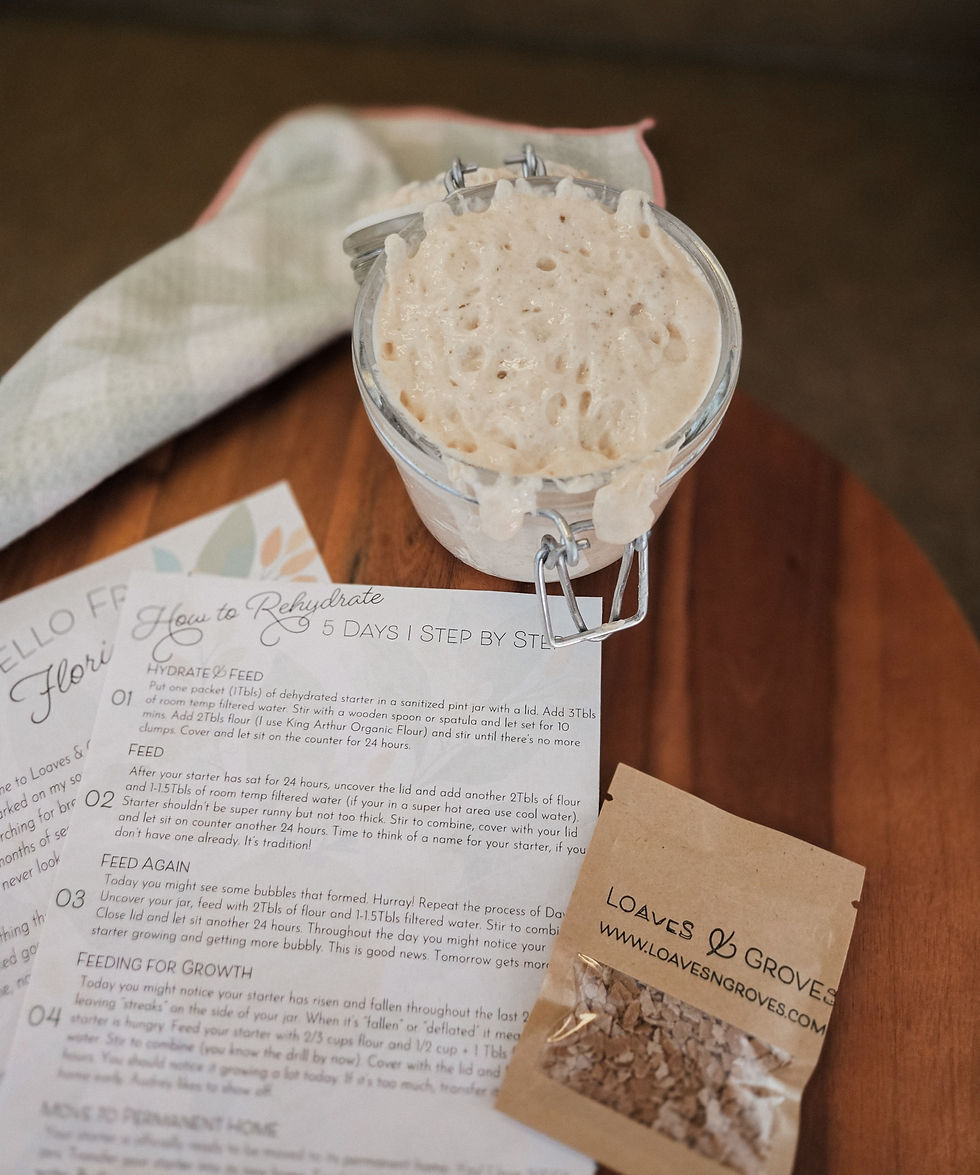
The Rise: Cover with a glass lid or a tea towel. Let it sit for 4–12 hours until it has doubled in volume and is super bubbly. Now it’s ready to bake!
Maintenance Rhythms
How you store your starter depends entirely on how often you want to bake.
On the Counter (Daily Baking): If you’re making sourdough English muffins or bread every day, keep it on the counter. It will need a feeding every 12–24 hours. In a warm Florida kitchen, it might even need a feeding every 12 hours to stay happy.
In the Refrigerator (Weekly Baking): This is the "hibernation" mode. Cold temperatures slow the yeast down, so you only need to feed it once a week. It can actually survive up to two months in the back of the fridge, though it will need a few "reentry" feedings to wake up before it's strong enough for a loaf of bread.
Your Sourdough FAQ
How long should I wait to bake after taking it out of the fridge? Usually, I recommend waiting at least 4 hours after feeding. However, for "no-wait" recipes or discard recipes, I often use it straight from the fridge with great results!
What is the dark liquid on top? That is called "hooch." It’s just a sign your starter is hungry! You can pour it off or stir it back in before your next feeding.
Stirring the hooch—that gray or clear liquid that occasionally forms on top of a sourdough starter—back into your mixture is a common practice, but it affects the final flavor and texture of your bread in specific ways.
Here are the primary benefits of stirring it back in:
1. Enhanced Flavor Profile

The hooch is essentially a concentrated byproduct of the fermentation process, containing alcohol and lactic acid.
Increased Tang: Stirring it back in imparts a significantly more sour, "sharp" flavor to your bread.
Aromatic Depth: It contributes to that classic, complex sourdough aroma that is often missing in younger or milder starters.
2. Consistency Management
Feeding your starter consistently requires a balance of hydration.
Maintaining Hydration: Since the hooch is liquid drawn from the starter itself, stirring it back in maintains the original hydration level you’ve established. Pouring it off technically leaves you with a slightly "thicker" or lower-hydration starter.
Texture: It helps keep the starter at a "thick pancake batter" consistency, which is often the ideal state for easy mixing and measuring.
3. Nutrient Retention
While primarily a waste product of the yeast, the hooch contains the acidic environment that the beneficial bacteria (Lactobacilli) thrive in. Keeping this acidity high by stirring the hooch back in helps protect the starter from "bad" bacteria or mold by keeping the pH level low.
When should you pour it off instead?
If you prefer a milder, creamier, or less acidic bread, you may want to pour the hooch off. This is also a good move if the liquid has turned a very dark black or has a particularly harsh, "acetone" smell, as removing it can help "reset" the flavor to something more balanced during the next feeding.
Note: If you see any fuzzy growth (mold) or pink/orange tints alongside the hooch, do not stir it in; in those cases, it's safer to discard the starter and begin fresh.
My starter is thick and pasty—is that right? Not quite. It should be like thick pancake batter. Different flours (like whole wheat vs. all-purpose) absorb water differently, so don't be afraid to add a little more water until the texture feels right.
What is the difference between "Discard" and "Active" starter? They are the same living culture! "Active" means it was recently fed and is at its peak bubbling height. "Discard" is simply the portion you remove before a feeding. At Loaves & Groves, we rarely throw discard away—it goes straight into crackers, Dutch babies, or skillet recipes.
Why is sourdough healthier? It all comes down to the fermentation. Grains have a protective layer of phytic acid that can make them hard to digest. The long fermentation process "pre-digests" the grain for you, breaking down that acid and unlocking the nutrients so your body can actually use them. Many people who struggle with standard bread find they thrive on sourdough that has fermented for 18–24 hours.
Comments