
The Heart of the Loaves & Groves Kitchen: Cultivating Your Starter
- Heather

- Mar 31
- 4 min read
Updated: Apr 1
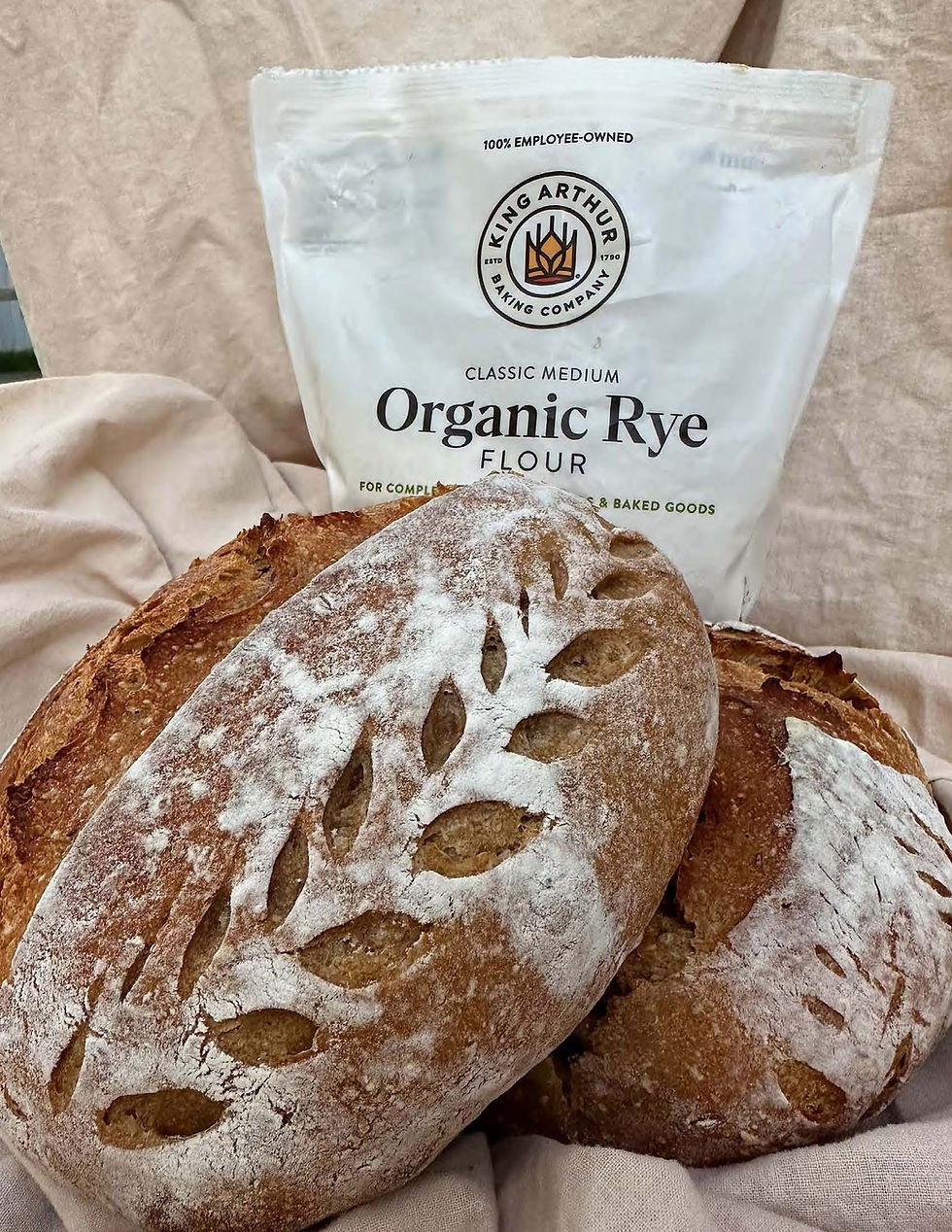
At Loaves & Groves, our journey always returns to the basics: flour, water, and the quiet magic of fermentation. Learning to craft a sourdough starter from scratch is more than just a recipe; it is an invitation to bring a living, breathing tradition into your home. This one versatile ingredient is the soul of our kitchen, breathing life into artisanal boules, tender cakes, farmhouse cookies, and so much more.

If you’ve spent any time exploring the world of traditional, nourishing foods, you’ve likely heard of the wonders of a wild yeast starter. In our kitchen, the starter is a constant companion—a vital anchor that has been nurtured and fed for over six years. It is the heartbeat of every bake we share.
What Is a Sourdough Starter?
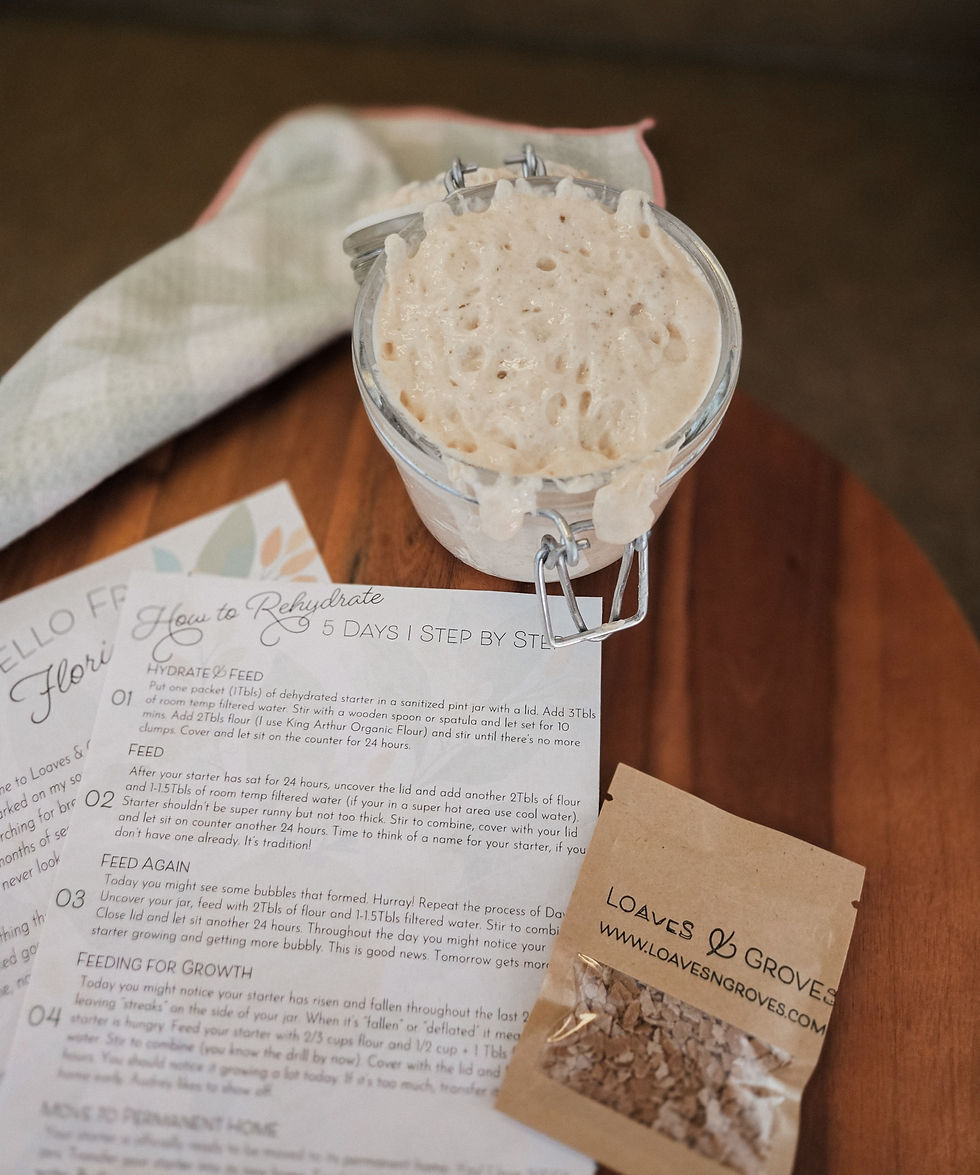
A sourdough starter is a live, active culture born from the simple union of fermented flour and water. It is a thriving ecosystem of beneficial bacteria and wild yeasts that work in harmony to naturally leaven bread and transform simple grains into deeply flavorful, easily digestible nourishment.
Why We Cherish the Sourdough Tradition
You might wonder why we dedicate time each day to handcrafting and maintaining a "beneficial colony" of microbes on our counters. The answer lies in our roots.
Before commercial yeast was isolated and sold in packets, a sourdough starter was a prized family heirloom—a valuable commodity passed down through generations. By maintaining your own starter, you are:
Honoring Heritage: Reclaiming a skill that has sustained families for centuries.
Prioritizing Wellness: Utilizing natural fermentation to unlock the nutrients in ancient grains.
Creating Connection: Building a "rhythm of the hearth" that slows down the pace of modern life.
The Wisdom of the Grain: Why We Ferment
At Loaves & Groves, we believe the secret to digestible bread lies in how we prepare the grain. Modern baking often skips a vital step that traditional cultures honored for centuries: fermentation.
The Role of Phytic Acid
Grains naturally contain phytic acid, an "antinutrient" that protects the seed but can interfere with our body’s ability to absorb essential minerals. While it serves the plant, our bodies weren't designed to process it in high amounts.
Reclaiming a Lost Art
Traditional cultures neutralized this by soaking and fermenting their grains—an art largely lost in the age of instant yeast. By returning to a sourdough starter, we use wild yeast and beneficial bacteria to break down these antinutrients, making the grain gentler on the stomach and far more nourishing.
Capturing the Wild
A sourdough starter captures the native yeasts right in your own kitchen, doing the hard work of transformation for you. Ready to bring this ancient rhythm back to your hearth? Read on to learn how to cultivate your own.
Sourdough Essentials: Your Starter FAQ
At Loaves & Groves, we want your journey with wild yeast to be as seamless as the rise of a perfect boule. Here are the most common questions we hear around the hearth.
How long until I can bake? Usually about one week to create a bubbly starter, though some environments may need up to two weeks to reach full strength.
Is discarding necessary? In the beginning, yes. If you don't remove a portion, you'll eventually need a mountain of flour to keep the growing colony fed. Once your starter is mature, you can stop "discarding" and start using that portion for discard recipes like sourdough crackers or pancakes.
How do I know it’s ready? It should double in size within 4–12 hours of feeding. We love the rubber band trick: place a band at the starting level to easily track the rise.
The Loaves & Groves Starter Recipe
Gather your tools and prepare to welcome a new rhythm into your kitchen.
The Ingredients
Flour: Unbleached all-purpose or Einkorn are our favorites for a nutrient-dense start.
Filtered Water: Pure water ensures the wild yeast can thrive without interference.
The Tools
Glass Vessel: Avoid metal, which can sometimes react with the delicate culture.
Wooden Spoon: For a traditional, gentle stir.
Tea Towel: To cover your bowl while allowing the culture to breathe.
The 7-Day Awakening
Day 1: Mix 1 cup flour and 1 cup water. Stir vigorously to incorporate air. Cover with a tea towel and rest for 24 hours.
Day 2: Discard half of the mixture. Add 1 cup flour and 1 cup water. Stir well and cover. This "reset" ensures your growing colony has enough fresh food to stay healthy.
Days 3–5: Repeat the Day 2 process once every 24 hours.
Days 6–7: Transition to feeding every 12 hours. By the end of day seven, your starter should be active, bubbly, and ready for your first loaf.
Tending Your Starter (Maintenance)
Once your starter is active, you can adapt its care to fit your life’s rhythm.
In the Refrigerator (Weekly Use) For most home bakers, the fridge is the perfect home. Cold temperatures slow the fermentation, meaning you only need to feed it once a week (or even every other week). When you’re ready to bake, pull it out a day early, give it a feeding, and watch it wake up.
On the Counter (Daily Use) If you are baking every day—perhaps for a busy household or a local market—keep your starter at room temperature. Because the "little guys" are more active in the warmth, they will need fresh flour and water every 24 hours.
Helpful Resources
At Loaves & Groves, we understand that bringing a living culture into your home can lead to many questions. Whether you are wondering about the best temperature for your jar or how to manage your baking schedule around a busy week, we are here to support your journey.
We’ve gathered a wealth of wisdom in our dedicated guide: How to Care for Your Sourdough Starter. Consider this your go-to reference for troubleshooting, advanced tips, and nurturing your starter so it thrives for years to come.
Thank you for stopping by our virtual hearth! We hope this is only the beginning of a beautiful sourdough journey for you and your family.
Whether you are baking a simple loaf for your table or preparing a special treat for a neighbor, remember that every bubble in your jar is a step toward a more mindful, nourishing way of life.
A Note from the Hearth: Thank you for inviting Loaves & Groves into your kitchen. Whether you are homeschooling your children through the science of fermentation or simply seeking a more ancestral way of eating, we are honored to be part of your sourdough journey.
Comments